
Making a TV Commercial in 2026: What Marketing Managers Need to Know About Free-to-Air, BVOD and Connected TV

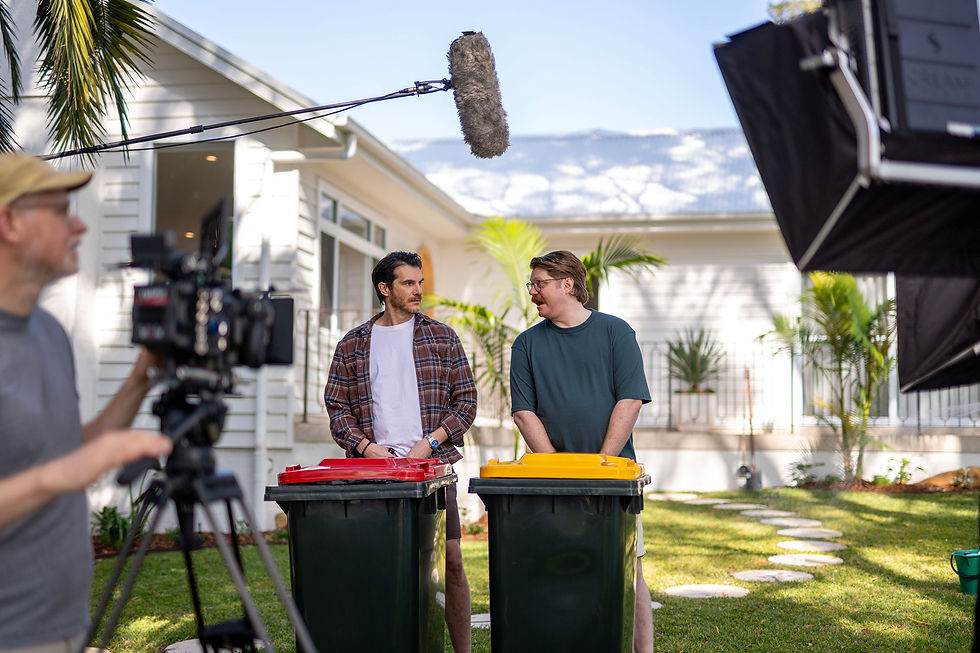
"Should we be on TV?" is a question we hear more often from enterprise marketing teams than we did five years ago. The reason is simple: TV is no longer one channel. A single commercial can now run on free-to-air, on broadcaster streaming apps like 7plus, 9Now, 10 Play and SBS On Demand, and on connected TV platforms that sell targeted, measurable inventory much like digital media.
That shift changes how a TV commercial should be made. In this guide we explain what is different about producing a TVC in 2026, what Australian approvals you need, and how to brief a production partner so one shoot covers every screen.
What Has Changed About TV Advertising?
TV advertising now covers three overlapping environments: linear free-to-air, broadcaster video on demand (BVOD) and connected TV (CTV).
Each reaches people on the biggest screen in the house, but they are bought, targeted and measured differently. The scale is significant. IAB Australia reports that video advertising in Australia reached $5.4 billion in 2025, growing close to 20% year on year, and that smart TVs are now in around 70% of Australian households. Big-screen streaming is where brand budgets and performance budgets are starting to meet.
For marketing managers, the practical outcome is that TV is no longer only for national brands with seven-figure media budgets. BVOD and CTV let you target by state, metro area, age and interest, and run in short bursts. That makes TV a realistic option for many enterprise brands that previously ruled it out.
Linear, BVOD and CTV in plain terms
Linear free-to-air: traditional scheduled broadcast on Seven, Nine, Ten and SBS. Broad reach, strong for brand awareness.
BVOD: ads served inside broadcaster streaming apps. Same premium content, but with digital targeting and reporting.
CTV: any ad delivered to an internet-connected TV, including BVOD plus global streaming services and other big-screen apps, often bought programmatically.
Does a TV Commercial Need to Be Made Differently Now?
Yes. A 2026 TVC should be planned as a family of assets, not a single 30-second spot. The same shoot usually needs to deliver a hero commercial, shorter cutdowns, and versions suited to streaming and social placements.
The core creative principles of television have not changed. A good TV commercial still has one clear message, a recognisable brand presence and an obvious next step for the viewer. What has changed is the number of places it will run and the technical rules for each one.
Plan your lengths before you write the script
Standard broadcast and BVOD lengths are 15 and 30 seconds. Some publishers accept 60 and 90 second spots, but Paramount ANZ, for example, notes that anything longer than 30 seconds can only run in mid-roll inventory. Six-second bumpers are also common on streaming and YouTube placements.

Design for the big screen, sound on
TV audiences watch from a couch, several metres away, usually with the sound on and often with other people in the room. That is very different from a phone in a hand on a train. In practice this means:
Supers and legal text stay on screen long enough to read from across a room, in a size that survives a living room TV.
Audio carries the message. Voiceover, music and sound design do much more work on TV than on social, where most video is watched muted.
Branding appears early and returns at the end, because viewers are less likely to skip than on social, but more likely to look away.
The frame is 16:9 first. If you also need vertical versions for social, we plan framing and safe areas on set so both crops work.
Add a response mechanism for connected TV
CTV opens options that linear TV never had. Many publishers now support QR codes on screen so viewers can scan to visit a page, claim an offer or call. If your campaign has a conversion goal, decide on the QR code, landing page and offer before the edit, and leave a clean space in the end frame for it.
What Approvals Does a TV Ad Need in Australia?
Any commercial running on Australian free-to-air television must be classified by ClearAds before it airs. ClearAds is the designated classification service under the Commercial Television Industry Code of Practice.
Classification usually starts with a script submission, then a final submission of the finished commercial. ClearAds can ask for substantiation of any claims you make, such as "Australia's most trusted" or "save 30%", so gather that evidence early. Industry delivery platforms recommend getting ClearAds approval even if your first plan is streaming only, because the same approved spot can then be sent to any free-to-air station later.
Here is how we build approvals into a production schedule:
Submit the script for pre-approval before the shoot, especially if the ad makes product claims, mentions pricing or targets a regulated category.
Have legal review the script and supers at the same stage, not after the final cut.
Allow time in the schedule between final edit and on-air date for classification, any requested changes and delivery.
Deliver through an approved ad delivery platform, which sends the master to each broadcaster with the correct identifiers. Your media agency coordinates the media placement, but we send the ad to the networks for you.
Broadcast also has technical standards that social video does not, including loudness levels and precise file specifications. A production partner who regularly delivers TVCs will handle these as part of finishing, but it is worth confirming that broadcast mastering is included in the quote. It’s also important to recognise that not all video production companies are familiar with broadcast technical specifications. The technical specifications required for a TVC to be delivered to a broadcast network are a lot more involved than they are for a regular video. When choosing a production company, ask if they have delivered a television commercial to a broadcast network before. Ask specific questions like which network the ad was delivered to, whether it was a regional or metro delivery, are they familiar with what a key number is, and which delivery platform they use. If they can answer these questions you can be confident they can handle the postproduction and delivery of your TV ad.

How Much Does a TV Commercial Cost to Produce?
Production cost depends far more on the creative idea than on the channel. A TVC can be a single-location shoot with a presenter, a fully animated spot, or a multi-day production with cast, locations and visual effects. The reason you might choose one format over the other will come down to the message, the audience and how you aim to hook them.
As a rough guide, the cost drivers that move a TVC budget most are:
Number of shoot days and locations. Each extra day adds crew, equipment and location costs.
Talent and usage rights. Actors appearing in a TV commercial typically cost more than talent for online-only use, and buyouts are priced by media, territory and term. We covered this in detail in our usage rights guide.
Animation or VFX. 2D and 3D animation can be very cost-effective for product and explainer-style TV ads, but complex 3D work takes longer to produce.
Music. Licensing a recognisable track for broadcast can cost more than the shoot itself. Custom composition or quality library music is often the smarter choice.
The number of versions. Each additional length, aspect ratio and market version adds edit and finishing time, though far less than reshooting.
The most important budgeting rule is to balance production spend against media spend. A beautifully made commercial with too little media behind it will not be seen often enough to work. Equally, a large media buy behind a weak ad wastes money every time it airs. Talk to your media agency and production partner together, early, about the split.
How Do You Measure Whether a TV Ad Worked?
BVOD and CTV give TV a measurement layer it never had: impressions, completion rates, reach by audience segment and, with QR codes or controlled market tests, response. Linear TV is still measured mainly on reach and frequency.
The smartest approach we see from enterprise clients is to treat TV as part of the funnel rather than a separate brand exercise. Run a TV burst in selected markets, then compare branded search, website traffic and sales in those markets against markets without TV. Make sure your social and paid search are ready to catch the extra demand, ideally using cutdowns of the same commercial so the message is consistent.
Who Should Consider TV in 2026?
TV suits brands that need broad awareness quickly, are launching something significant, or want the credibility that comes with appearing on premium screens. It is particularly effective for consumer brands, financial services, health, education, property and any organisation with a strong state or national presence.
It is less suited to brands with a very narrow B2B audience, where LinkedIn video, sales enablement content or targeted pre-roll will usually deliver better value. For many brands, the right answer is a mix: one well-made hero commercial, shot to also produce social pre-roll, website video and photography from the same production days.
Questions to Ask Before You Commission a TVC
Before you brief a production company on a TV commercial, have answers to these:
Which environments will it run in: free-to-air, BVOD, CTV, YouTube, social, or all of them?
Which lengths and aspect ratios do you need, and has the media plan been confirmed?
Does the ad make claims that will need substantiation for ClearAds?
What territories and term do you need for talent and music rights?
Is there a response mechanism, such as a QR code or offer, for connected TV?
What other assets, such as stills or social cutdowns, should we capture on the same shoot?
The Bottom Line
A TV commercial in 2026 is a multi-screen asset: it should be scripted, shot and finished to run on free-to-air, BVOD, connected TV and social from day one. Plan your lengths before writing, design for a sound-on big screen, build ClearAds classification into the schedule, and capture your cutdowns and stills on the same shoot.
At Global Pictures, we have spent more than 18 years producing television commercials, brand videos and animation for Australian brands from our Sydney studio. If you are weighing up whether TV belongs in next year's plan, we are happy to talk through the creative, the deliverables and a realistic budget before you commit to a media buy.


Comments