.png)
How to Read a Video Production Quote: What Every Line Item Actually Buys

Why can two quotes for the same brand video can differ by thousands? Often the difference is what each studio assumed about crew size, shoot days, revisions and usage rights. After 18 years producing video in Sydney, we have seen more budget pain caused by unread quotes than by expensive ones.
This is a plain guide to reading a video production quote line by line: what each line buys, what it should specify, and which missing lines cost you money later.
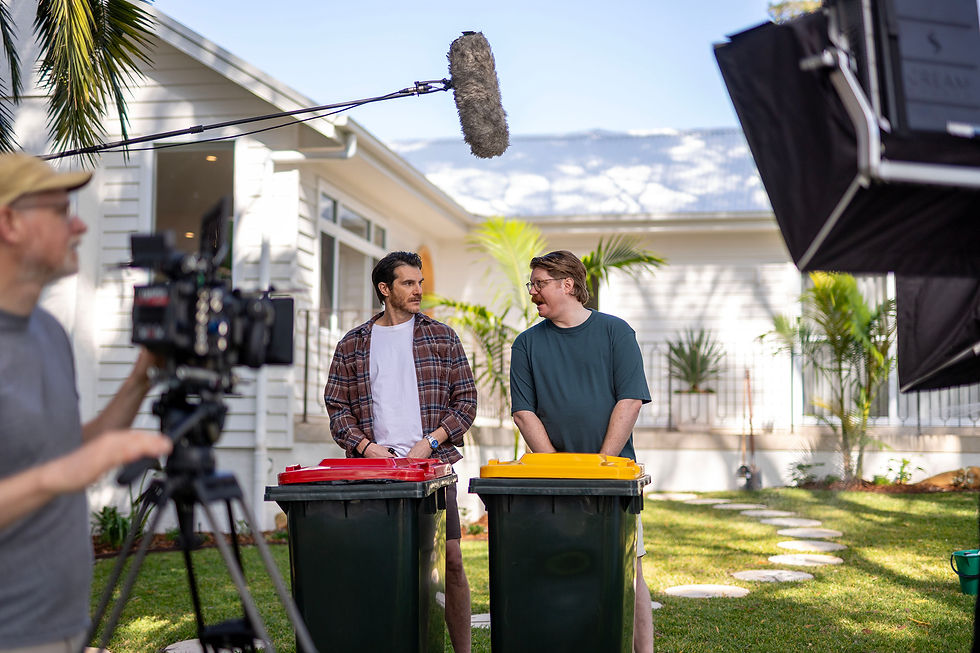
Why do two quotes for the same brief look so different?
Because a brief almost never defines the variables that drive cost. A quote is a studio's interpretation of your brief, priced. If your brief says "a two minute brand video with interviews and b-roll", one studio may price a single day with a three person crew and one location, and another may price two days, a director, a gaffer, a stylist and three locations. Both are valid readings. Only one matches what you actually pictured.
The practical fix is to compare assumptions before you compare totals. Ask each studio for the number of shoot days, crew size, locations, revision rounds and licence term stated explicitly. Once those five variables match, price comparison becomes meaningful.
Pre-production: what you are paying for before anyone films
Pre-production lines cover the thinking, planning and logistics that make the shoot day work. Typically this is 10 to 20 per cent of a corporate video or brand video budget, and it is the worst place to cut.
Expect to see some combination of:
Producer / production management. Scheduling, crew booking, call sheets, location liaison, permits, insurance certificates, risk assessments and client meetings.
Creative development, script and treatment. The concept, the script or interview question set, and a treatment showing look, tone and structure. If a quote has no creative line, you are usually buying execution only and supplying the idea yourself.
Storyboards or animatics. Normal for animation, television commercials and anything with a tight narrative. For a 2D or 3D animation project, storyboard and style frame approval is where the budget is genuinely controlled, because changing a frame is cheap and changing a finished animated scene is not.
Casting and location scouting. Priced separately when the video needs actors or a location you do not own.
Production: the shoot day lines, decoded
The production block is where most of the money sits, and it is driven by three things: how many days, how many people, and how many moves.

Crew. Crew is quoted per person per day, and Sydney rates in 2026 sit roughly between $1,200 and $2,500 a day for a camera operator, with a small three person documentary style crew landing in the $3,000 to $5,000 a day range and a full commercial crew well above that. More crew is not vanity. Each person has a valuable role to contribute to the production, and we only include the necessary team members for each project.
Equipment. Camera package, lenses, lighting, grip, audio, and any specials: gimbal, drone, probe lens, motion control. Read this line for what is not there. A quote with no lighting line will look flat, and no amount of colour grading fixes it.
Talent. Actors, presenters, voice artists and extras, usually quoted as a session fee plus a usage fee. The usage fee is tied to a term, a territory and a media type, so a talent line is meaningless without those three words attached.
Studio, locations and logistics. Studio hire, location fees, permits, parking, travel, freight, catering. Sydney CBD and transport locations often need a permit and a traffic plan; that is a real line, not padding.
Contingency. Usually 5 per cent. A quote with no contingency is not cheaper. It just means inevitable supriseses becomes a liability rather than a budgeted item.
Post-production: where scope quietly expands
Post-production lines should state a deliverable count, a duration, and a number of revision rounds. This is the most common place for scope to expand without anyone noticing.
Edit. Usually quoted as days or as a flat fee per deliverable. Look for the revision allowance: two rounds is standard, three is generous, "unlimited" usually means poorly managed.
Motion graphics and titles. Lower thirds, logo animation, data visualisation. Complex graphics belong in the animation line, not tucked into an edit day.
Colour grade and sound mix. On a brand video or television commercial these are separate specialist passes. On a corporate video they are often bundled, which is fine if the quote says so.
Music and stock licensing. Named as a line with a licence scope. Library music for web use is a few hundred dollars. A known track for broadcast is a different universe.
Captions, versions and exports. The 16:9 master is one deliverable. A vertical cut for pre-roll video on paid social, a six second bumper, a subtitled version and a broadcast spec file for a TVC are four more. Each one is real work. Decide on the version list before you sign, because retrofitting vertical cuts from a wide master always looks compromised.
The lines that are missing, and what they cost you
Most budget blowouts do not come from the lines you read. They come from the lines nobody wrote. Before you approve any quote, check that these five exist in writing:
Usage rights and licence term. Perpetual, all media, worldwide costs more than 12 months digital in Australia. If it is unstated, assume it is narrow.
Revision rounds and what counts as one. A round is consolidated feedback from your whole stakeholder group, not five people emailing separately.
Overtime terms. Most shoot days are quoted at 10 hours. Know the hourly rate past that before the day you need it.
Weather and cancellation terms. Who pays for a postponed day, and how much notice avoids a charge.
Assumptions and exclusions. The most valuable paragraph in any quote. It tells you what the studio believes you are providing: talent, locations, product, brand assets, approvals on time.

Should you ask for a cheaper quote or a smaller scope?
Ask for a smaller scope. A discounted quote usually keeps the same deliverable list and removes the people and time that make it good, which is how you end up with a two day brief shot in one day with no sound recordist. Cutting scope is honest and controllable: fewer locations, fewer deliverables, one interview format instead of three, photography captured on the same day rather than a second shoot.
Some genuinely effective ways to reduce a quote without reducing quality:
Consolidate shoot days. Two case study videos filmed on one day cost far less than two single day shoots.
Shoot photography on the same day as video, with a stills photographer working alongside the crew.
Use existing footage for b-roll and buy only what is missing.
Replace a costly location with a studio build or 2D animation.
Narrow the licence term now and extend it later if the asset performs.
Bottom line
A video production quote is a priced set of assumptions, not a price list. Compare shoot days, crew size, deliverable count, revision rounds and licence term before you compare totals, and read the assumptions and exclusions paragraph twice. If a quote is significantly cheaper than the others, find out which of those five variables it shrank, because one of them always has.
At Global Pictures we prefer to provide our clients with a detailed proposal outlining the full scope of works, key deliverables and detailed pricing so that you have to confidence to see exactly what we're delivering, how we're going to do it and the social proof to back it up. Our clients should be able to see what they are buying, cut scope on purpose rather than by accident, and know the number they approved is the number they pay. If you have a quote in front of you and you are not sure what it includes, send it to us and we will talk you through what each line means.


Comments